

Presentation and Discussion of European Research Findings
Featured
Date:
Time:
-
Speakers:
Link:
Calendar:
Platforma Klio (Croatia), TTE – Történelemtanárok Egylete (Hungary), and UDI EUROCLIO (Serbia) invite history teachers, teacher educators, researchers, and other education professionals to an international online presentation and discussion of the findings from the European study:
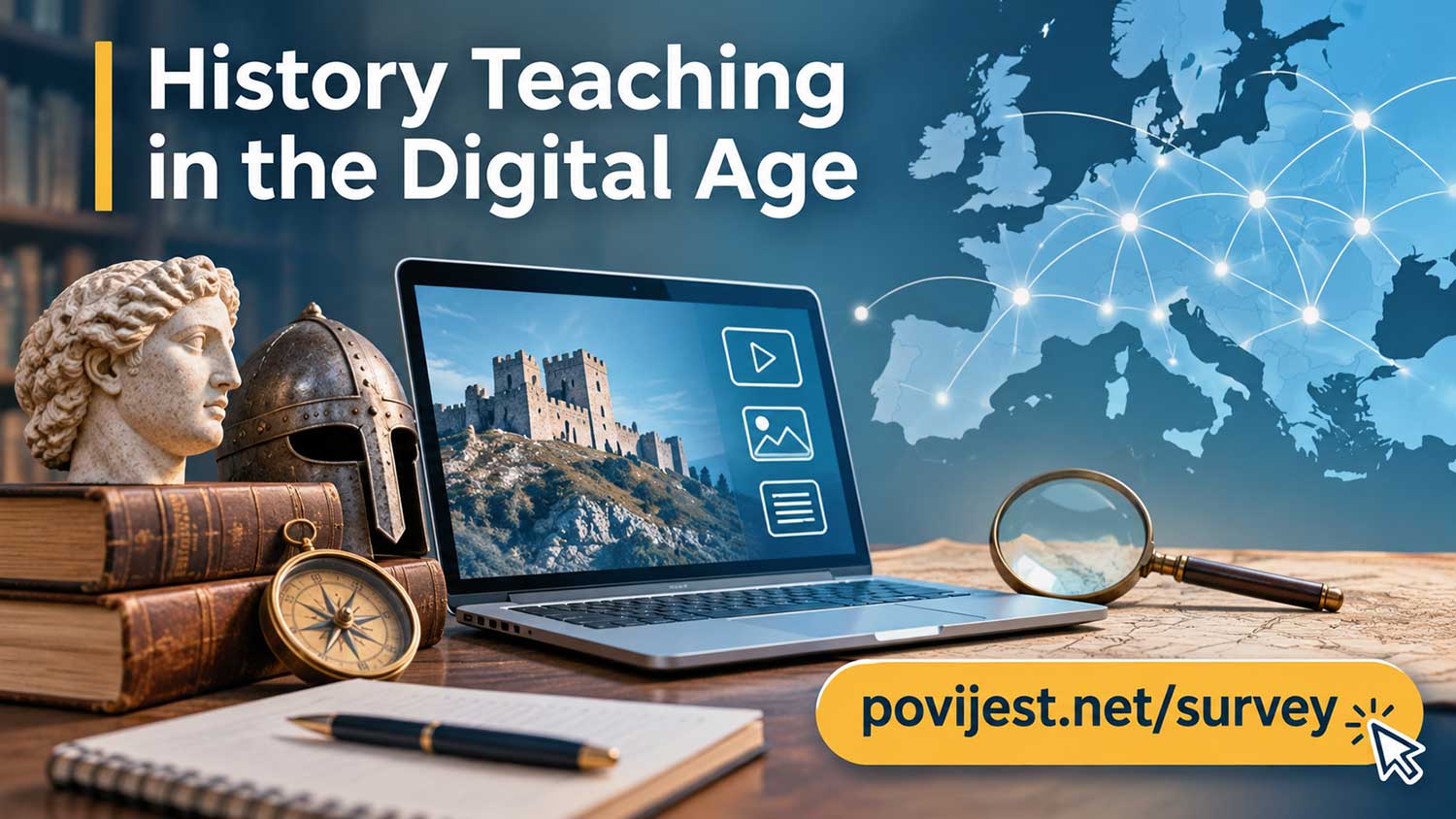
History Teaching in the Digital Age: Practices, Artificial Intelligence and Future Needs in Europe
Conducted across Europe in November 2026, the study explores how history teachers use digital technologies in their everyday practice, how they perceive the opportunities and challenges of generative artificial intelligence, and what resources and professional support they consider most important for the coming years.
The event will present key research findings and provide an opportunity to reflect on their implications for history education, professional development, and future digital teaching practices.
Speakers
- Miljenko Hajdarović – Platforma Klio, Croatia (Research Lead)
- Balazs Barany – TTE – Történelemtanárok Egylete, Hungary
- Aleksandar Todosijević – UDI EUROCLIO, Serbia
Topics for Discussion
The presentation and discussion will focus on three interconnected areas:
1. Digital Practices in History Education
How are history teachers using digital technologies and resources? What approaches support historical inquiry, source evaluation, and student learning?
2. Generative AI: Opportunities and Concerns
How do teachers perceive generative artificial intelligence? What benefits, risks, and challenges do they identify for history education?
3. Future Needs and Professional Learning
What barriers do teachers face, and what forms of training, resources, and institutional support would help them in the coming years?
Join the Conversation
Beyond presenting the research findings, the event aims to encourage an international exchange of perspectives on the future of history teaching in an increasingly digital educational environment.
Participants will have an opportunity to ask questions and contribute to the discussion.
Event Tickets
Qty
Free per ticket
90 available