
How is history taught in your country? What is it like to work as a history teacher there? What challenges does history education face – and what can teachers in other countries learn from your experience?
History Elsewhere is a long-running interview series published by the Croatian History Portal (Hrvatski povijesni portal), an electronic journal dedicated to history and history education [ISSN 1846-4432] since 2006. The idea is simple: rather than looking at education systems only through curricula, legislation, official reports and statistics, we want to hear from the people who work in history classrooms every day.
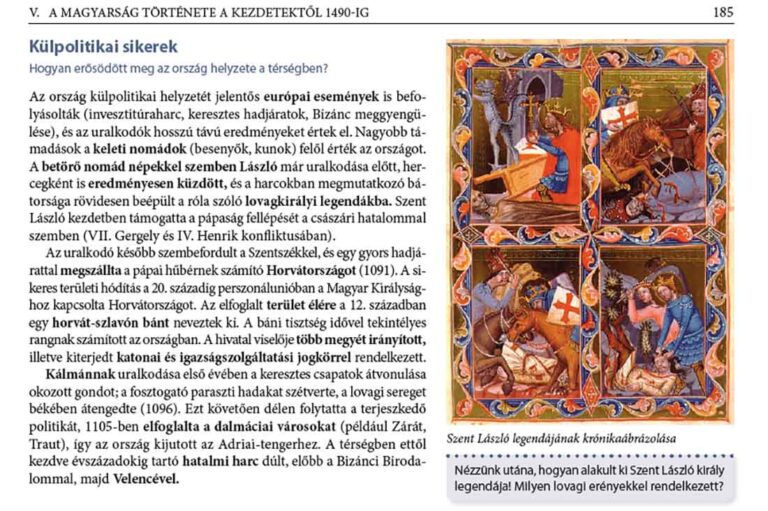
We are interested in the professional experience of history teachers, the place of History within national education systems, curriculum development, teaching methods, textbooks and digital resources, assessment, professional development, controversial history, public uses of the past, and the relationship between history education and democratic society. Earlier interviews have featured history teachers from Serbia, Slovenia, North Macedonia and Hungary. We are now expanding the series and inviting colleagues from across Europe and beyond to contribute.
The 12 + 2 format
To make individual interviews interesting in their own right while also allowing readers to compare experiences across countries, each interview follows a 12 + 2 format. All participants receive the same twelve core questions. Two additional questions are then tailored to the particular country, education system, current debate or professional experience of the interviewee.
The twelve core questions
1. Where and what do you teach, and how long have you been working as a teacher?
A short introduction to your school context, the age of your students, subjects taught and professional experience.
2. What is it like to be a history teacher in your country today? What would you identify as the positive aspects of the profession and its greatest challenges?
3. What is the social and professional status of history teachers in your country?
How are teachers perceived by society? What are their working conditions, professional responsibilities and opportunities?
4. What place does History have within your country’s education system?
At what age does history education begin? How many lessons do students normally have? Is History compulsory? What is its position in different types of schools and at different levels of education?
5. How is the History curriculum organised, and how much professional autonomy do teachers have in implementing it?
For example: chronological or thematic organisation, the relationship between national, European and world history, compulsory and optional topics, and the freedom teachers have to select content, sources and approaches.
6. What does good history teaching look like in practice in your country?
How common are approaches such as working with historical sources, inquiry, discussion, multiperspectivity, project-based learning, fieldwork or other forms of active learning?
7. How are textbooks and other teaching materials selected and used?
How important are textbooks in everyday teaching? Who chooses them? What role do digital resources and materials created by teachers themselves play?
8. How is student learning in History assessed?
To what extent does assessment focus on factual knowledge, and to what extent on source analysis, argumentation, interpretation and historical thinking?
9. How are history teachers educated and professionally developed?
What does initial teacher education look like? What opportunities exist for continuing professional development? What roles are played by professional associations, universities, NGOs or international cooperation?
10. Which historical topics are currently the most difficult or controversial to teach in your country, and how do teachers approach them?
11. What role does history play in the public and political life of your country today?
Are historical questions prominent in politics, media, commemorations, monuments or public controversies? Do these debates affect what happens in history classrooms?
12. Can history education contribute to the protection of democratic values, human rights and individual freedoms? If so, how?
This question deliberately does not assume that history education automatically strengthens democracy. History teaching can help students understand evidence, recognise propaganda and manipulation, examine authoritarianism, consider different perspectives and discuss difficult issues. But history education has also been used to promote nationalism, exclusion and authoritarian political projects.
We are therefore particularly interested in how teachers themselves understand the democratic potential – and responsibility – of history education.
And the additional +2?
The final two questions are specific to each interview. They may address an issue particularly relevant to the interviewee’s country – for example, memory politics, regional differences in curricula, colonial history, divided education systems, recent curriculum reforms or the teaching of a particularly contested past.
They may also focus on the interviewee’s own field of expertise, such as Holocaust education, local history, heritage education, digital history, human rights education or innovative teaching practice. The purpose is to preserve the personal character of each conversation while maintaining a common framework that gradually creates a broader international picture of history education.
How does the interview work?
Our preferred format is a written interview. You will receive the questions in advance and can answer them in your own time. One reason for choosing this format is precisely to give participants enough time to think, reflect and formulate answers that genuinely represent their professional experience.
We also hope that the answers will remain personal. The value of the series lies in hearing the teacher’s own voice, experiences, doubts and arguments rather than receiving a polished response written by a machine. Language-support tools may of course be useful, but we are primarily interested in your thinking and your experience.
You do not have to answer in English. You may write your responses in any language in which you can express yourself accurately and comfortably. The interview will ultimately be published in Croatian, and I will translate the responses for publication.
Before publication, any points requiring clarification can be checked with you.
Prefer to talk instead?
There is also another option. If you would prefer a conversation rather than a written interview, we can record the interview as a video podcast in English. In that case, the twelve core themes will still guide the conversation, but the format can naturally become more conversational and allow follow-up questions.
The video conversation may then be accompanied by a Croatian-language introduction, summary or transcript on the Croatian History Portal.
Why participate?
History Elsewhere is not intended to rank education systems or identify a single model of “best practice”. Its purpose is to create a growing collection of professional perspectives from history classrooms in different countries.
By asking comparable questions, we hope gradually to document similarities and differences in:
- the status of history as a school subject,
- teacher autonomy,
- curriculum organisation,
- classroom practice,
- assessment,
- textbooks and educational resources,
- teacher education and professional development,
- controversial and sensitive histories,
- public uses of the past,
- and the role history education may play in democratic societies.
The most valuable answers are therefore not necessarily descriptions of successful practice. Problems, contradictions, unresolved debates and things that teachers would like to change are equally important.
Interested in taking part?
If you teach History, work in history education, teacher education or history didactics, and would be interested in contributing to History Elsewhere, please contact:
Miljenko Hajdarović
Editor, Croatian History Portal
urednik@povijest.net
Please briefly introduce yourself, your country and your professional context.
We are particularly interested in hearing from practitioners who can describe not only what official documents say about history education, but also what history teaching actually looks like from inside the classroom.


I am interested in participating with this program
Please send e-mail to the address provided in the article.
Nasi novi udzbenici iz istorije za osnovnu skolu su, na zalost malo kompleksniji
Čiji su to “naši” i zašto kažete da su kompleksniji?